In short
- The City collects three garbage items every two weeks. A bulky item such as a couch counts as one.
- The set-out window opens at 6 pm on the eve of collection and closes at 7 am.
- The City leaves appliances, electronics, drywall and other renovation waste at the curb.
- Garbage above three items is collected only in a City yellow bag, and furniture cannot be bagged.
- The Trail Road landfill charged $172.70 a tonne for residential garbage in 2026, with a $43.20 minimum.
Typical prices in Ottawa
| Job | Typical range | Notes |
|---|---|---|
| Landfill, residential garbage above 250 kg | $172.70/tonne | City of Ottawa, Trail Road, 2026; HST-exempt |
| Landfill, load under 250 kg | $43.20 minimum | City of Ottawa, 2026 |
| Landfill, mixed garbage and recyclables | $345.40/tonne | City of Ottawa, 2026; minimum $86.40 |
| Landfill, scrap metal and up to 10 tires a day | Free | City of Ottawa, 2026, when separated |
Sources. Seen 29.10.2026. City of Ottawa: Curbside garbage collection; Special items; Bulky Waste; Moving in or out; Rates for the Trail Waste Facility Landfill.
The three-item rule
Since 2024 Ottawa has capped curbside garbage at three items every two weeks. An item is a garbage bag, a bin or container up to 140 litres and under 15 kg (33 lb) with a removable lid, or one bulky item. Recycling and green bins stay unlimited. In a room clear-out the count runs out fast: two bags and a couch leave no slot for the mattress.
Garbage goes out after 6 pm the night before and no later than 7 am on collection day. Place it on the ground near the road, clear of the sidewalk, the roadway and the top of any snow bank. That last point matters from December to March, when a couch left on a bank stays behind.
What counts as bulky
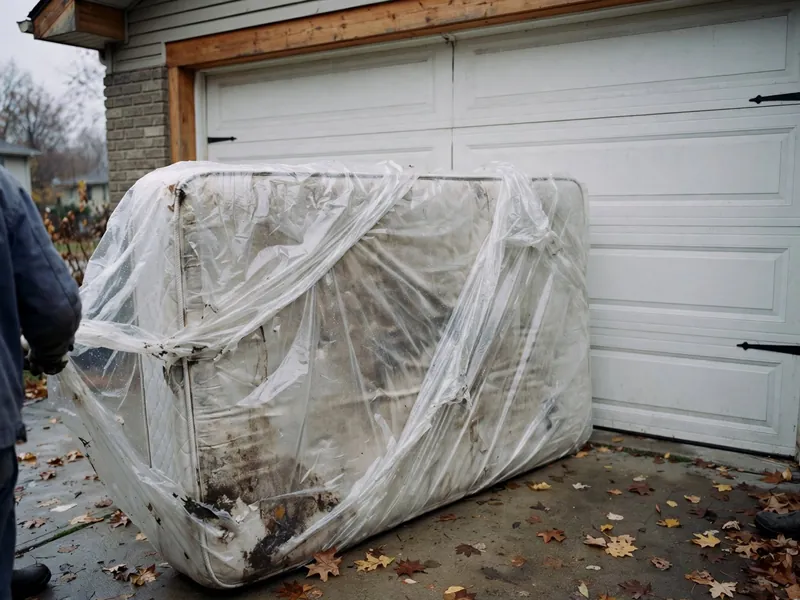
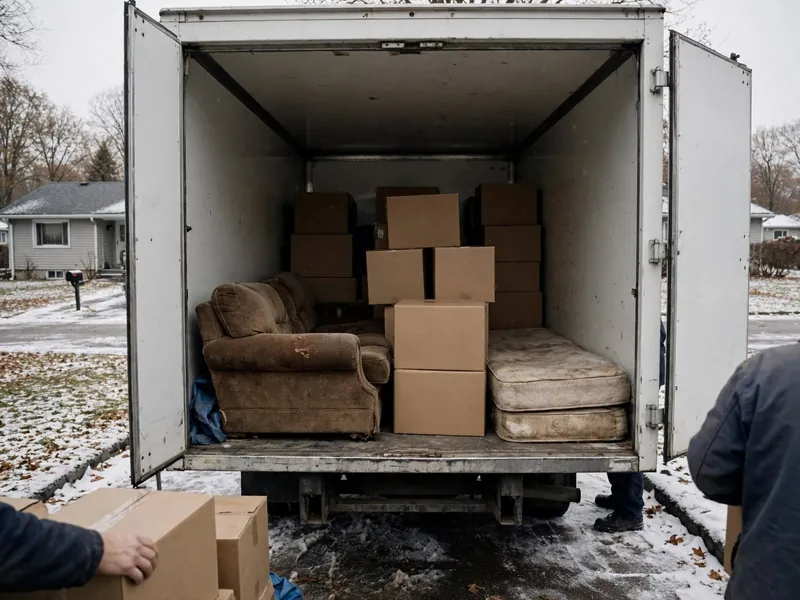
The City describes a bulky item as any piece of furniture or object from the home that will not fit in a standard garbage bag. Its list includes mattresses, furniture, floor lamps, sinks, dismantled toilets, barrels, pool pumps and pool covers. Sofas, mattresses and furniture are picked up at the curb. Each piece uses one of your three slots, so a couch and two chairs fill a whole collection. See also mattress disposal.
Yellow bags and containers
Garbage above the three-item limit is collected only in a City-branded yellow bag. Large bulky items and furniture cannot be bagged, so a yellow bag does not create an extra slot for a couch. Anything outside the rules stays at the curb with a courtesy tag. Container details from the City page:
- Bins need a handle and a removable lid, not a fixed or hinged one, and may not be tied shut with rope or a bungee.
- A 220-litre or larger bin is unacceptable.
- Carpet goes out tied in bundles within the size and 15 kg weight limits above.
- Glass and sharp objects do not go loose in a plastic bag.
What the City does not collect
Two groups of household items are excluded from bulky collection. The first is appliances: refrigerators, freezers, stoves, microwaves, dishwashers, dryers, washers, air conditioners, hot water tanks, oil tanks and furnaces. The second is electronic waste, such as computers, TVs, phones and printers. Fridges, freezers, air conditioners and dehumidifiers also need their cooling chemicals removed and a tag from a technician certified for refrigerants before a landfill site accepts them.
Renovation waste has its own line: plaster, wood, drywall, concrete, asphalt and similar material from construction or demolition stays out of regular garbage collection. The City sends it to the Trail Road landfill or another landfill. For a hauler’s view of the same pile, see renovation debris removal and appliance removal.
What the landfill charges
Everything the curb refuses still ends up weighed at a disposal site, and the City publishes its Trail Road rates. In 2026 residential garbage costs $172.70 a tonne above 250 kg, with a $43.20 minimum under that. Garbage mixed with recyclables costs $345.40 a tonne, and the landfill no longer accepts glass, metal, plastic, paper or cardboard packaging. Scrap metal and up to 10 tires a day are free when separated. A hauler is priced differently; the item price guide shows the published figures.
When the curb is the wrong place
A piece in usable shape can leave through a charity, and the City lists several that collect. See donating furniture in Ottawa. For everything else, a hauler comes into the house, takes the piece out and chooses the destination. Which things a hauler takes, and which it refuses, is on what haulers take.
Who you are dealing with
The City runs the curb; Ottawa Junk Desk has nothing to do with collection days. What you send us is the overflow: the fourth piece, the fridge, the drywall. One independent hauler gets that list and phones with a price for those pieces alone.
Questions to ask the company
- Will you take items the City leaves at the curb, such as appliances and electronics?
- Does your price include carrying the piece out of the house, or do I move it to the curb?
- If my bulky item has to wait for collection day, can you come before that date instead?
- How do you price a pile of drywall or other renovation waste?
- Which of my items would you refuse?
Have this ready for the call
- Your collection day and the number of garbage bags and bins already going out.
- A list of the bulky pieces, with photos, and which of them are furniture.
- Whether any piece is an appliance, an electronic or renovation waste.
- Where the pieces sit in the house and how they leave: stairs, a lane, a lobby.
- For condos and apartments, the building's rule for large items.
Questions people ask
Does a couch count as one of my three garbage items?
Yes. One piece of furniture is one item, exactly like a 140-litre bag under 15 kg. So a couch plus two bags uses the whole allowance for that cycle, and a yellow overflow bag cannot hold the sofa.
What happens to a fourth bag on garbage day?
Garbage above the three-item limit is collected only if it is in a City yellow bag. Anything else is left behind with a courtesy tag explaining why. Cardboard boxes do not count as garbage containers, because cardboard belongs in the fibres recycling bin, which is unlimited.
How should a rolled-up carpet be set out?
Cut it into rolls a crew can lift: 4 ft (1.2 m) long at most, 2 ft (60 cm) thick, 33 lb (15 kg), each tied. A wall-to-wall room rarely fits that, so the rest goes on a hauler’s truck. Broken glass goes in a sealed cardboard box marked “broken glass”, which counts as one item.
Can I put a TV or a computer out with bulky items?
Electronics are excluded. The City’s bulky-waste page names TVs, computers, phones and printers as e-waste that curbside crews leave behind. Trail Road accepts electronics at no charge, and the City’s Waste Explorer lists retailers that take them back.
Does the curb rule cover my apartment or condo?
The City says it provides collection to 298,000 single-family households. Apartment and condo buildings often arrange their own removal. Ask the property manager what the building allows for large items, and which hours and elevator the move-out window gives you.
Where do I leave a sofa in winter?
At ground level beside the road, clear of both the sidewalk and the roadway. A snowbank is off limits, and the City cites public safety, crew safety and clear sidewalks as its reasons. Timing matters too: a sofa out at noon breaks the window.